
What the day feels like
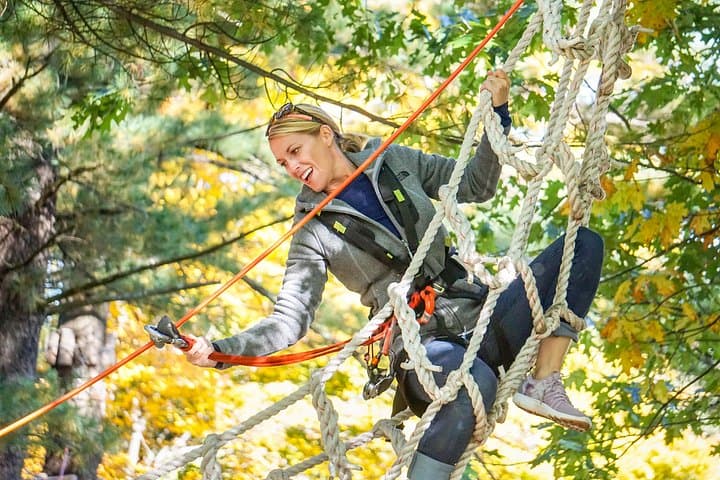
You step off a plank the size of a keyboard and the world rearranges itself. The trees below become a living floor; the Helderberg Escarpment, a stone spine, runs away to the west; wind finds the gaps in the canopy and tugs at your harness as if testing whether you belong up here. For three hours at WildPlay Thacher you move through suspended obstacles—log ladders, swinging bridges, cargo nets, ziplines—and every element insists on one thing: commitment.
The park sits on one of the Hudson Valley’s sharper geological moments. The Helderberg Escarpment is a limestone rim that records epochs when this place was a shallow sea, and its cliffs and ledges host trails and overlooks that have drawn hikers, students of geology, and now a treetop adventure course. WildPlay has anchored its course into that escarpment-edge forest, so your route alternates between forest shade and sudden views—broken by the whoosh of a zipline and the sudden jolt of your own breath.
There’s simple theater to the experience: you’re clipped in, you learn the lingo—belay, tether, WTF Jump—and the course responds. Lower levels are patient and encouraging: wide planks, short zips, exercises in balance that let you find rhythm. Higher up, the obstacles get stingier, demanding coordination and a fair measure of nerve. The signature WTF Jump is less a stunt than a contract with gravity: you climb a rope ladder to a small platform, clip into a jump line, and step forward or back. The drop is measured and safe; the moment is pure, personal proof that you can do something that looks, when you think about it, impossible.
WildPlay Thacher packages the adrenaline with good design. Safety briefings are part of the 3-hour session; staff guide newcomers through harnessing and technique. The course architecture is obvious to anyone who’s used to ropes courses—wood, rope, steel—but the setting gives each element a different personality. A zipline running parallel to a cliff feels like a dare from the landscape itself; a swinging log behaves like a mischievous friend, punishing sloppy footwork and rewarding quiet concentration.
This isn’t a wilderness expedition, but it’s a place where local culture and natural history enrich the fun. John Boyd Thacher State Park—created with land donations from the Thacher family in the early 20th century—has long been a weekend magnet for Albany-area families and geology students. The park’s overlooks and trails make it easy to follow a longer day: pair a morning on the Indian Ladder Trail or a climb to Sunset Rock with an afternoon of high-wire work. If you want quiet after the adrenaline, the escarpment’s ledges at twilight serve up a broad, hush-filled view of the Hudson-Mohawk lowlands.
Practicalities are straightforward. Sessions run about three hours; the operator lists a from-price around $50 (confirm current rates when you book). The course is structured for progression—beginners can expect to move through lower challenges and, if comfortable, step up to higher ones. There are waivers and a safety briefing; staff checks and continuous belay systems mean you’re clipped in the whole time. If you have questions about age or weight limits, or need accessibility details, reach out to WildPlay directly rather than guessing—specific restrictions and accommodations change by location and season.
For travelers, the experience is a good fit for mixed groups. Families with older kids, couples who want an active afternoon, or solo travelers looking for a physical project will all find value here. It’s not technical climbing, so you don’t need weeks of training—what it asks for is presence: steady footing, a willingness to try, and respect for the safety protocols.
Timing matters. Spring and fall give the course extra charm—the forest breathes differently and visibility from elevated zips sharpens; summer is busy and warm; winter offers fewer sessions but a different kind of clarity over the valley on cold, crisp days. Bring layers, tape up loose shoelaces, and plan logistics so you’re not rushing into the harness.
If you come for a weekend, fold in local flavor: Albany’s farm-to-table dining and craft breweries are an easy follow-up, and small-town Voorheesville and nearby Altamont offer quieter options for stretching out after the course. Above all, respect the park. It’s a carefully maintained natural area—leave no trace, follow staff instructions, and treat cliffside habitats with the same attention you’d give your own gear.
WildPlay Thacher is less about conquering nature and more about negotiating a partnership with it. The trees, cliffs, and wind are active players: they will challenge, humiliate, and—if you let them—teach you. When you return your harness and look back at the lines cutting across the canopy, you’ll have a clearer sense of how to balance fear and forward motion. That makes it a perfect afternoon for people who like their travel equal parts thrill and tactility: a place to test limits, learn new motor patterns, and leave with an honest lift of confidence.
Before you go, check bookings (instant confirmation is usually available), arrive slightly early for check-in, and expect a thoughtful staff who want you to push yourself without becoming reckless. Three hours is enough to be exhausted, elated, and quietly proud. The escarpment, unfazed, continues to keep watch.
Trail wisdom
Small choices, better day.
Wear snug, closed-toe shoes
Sturdy sneakers with good tread keep you secure on narrow planks and swinging elements.
Arrive early for orientation
Plan 20–30 minutes before your start time for check-in, waiver signing, and harness fitting.
Avoid loose clothing and long accessories
Zip pockets and remove scarves, dangling jewelry, or anything that can snag on hardware.
Hydrate but don’t overdo it
Bring a small water bottle—sip between elements rather than carrying bulky hydration during climbs.
Local knowledge
Read the place, not just the route.
Watch for native species including Peregrine falcon (occasionally sighted on cliffs), White-tailed deer.
Keep an eye out for wildlife during the transition between areas and habitats. Respect distance guidelines.
The course uses anchored structures within a managed park—stick to staff instructions, pack out trash, and keep to marked trails to protect cliffside habitats.
Follow the guide's instructions on size limits, ethical handling, and leave-no-trace practices.
Indian Ladder Trail—rock-cut steps and shaded canyons that reward a quiet walk before or after the course. Sunset Rock—short hike to a broad overlook that’s ideal for late-afternoon views and photos
Locally recommended viewpoints and quiet spots known best to local operators.
John Boyd Thacher State Park encompasses the Helderberg Escarpment, land given to the state by the Thacher family in the early 20th century and long valued for its geology and sweeping overlooks.
Maritime roots and regional tradition shape the waterways and working coasts.
Seasonal guide
Four versions of the same landscape.
Spring
Best forblooming forest · less crowded courses
Challengesmuddy approach trails · cool mornings
Spring brings fresh leaves and a quieter vibe, but expect muddy spots on approach trails and cool temperatures early in the day.
Summer
Best forlong daylight hours · family outings
Challengesheat and humidity · peak crowds
Summer offers the most session availability and late light, though midday heat and busier weekends are common—book in advance.
Fall
Best forleaf color from ziplines · crisp, stable weather
Challengescooler nights · higher demand on weekends
Fall is optimal for views and comfortable conditions—expect more bookings on peak foliage weekends.
Winter
Best forclear air and quiet sessions · unique winter vistas
Challengesreduced schedule · cold and ice
Some winter sessions may run when temperatures allow; expect chilly air and limited availability—call ahead.
Pack with intention
What to bring.
Good to know
Common questions.
Sessions are designed to last about three hours, which includes a safety briefing, harness fitting, and time to work through multiple course elements.
Plan the edges
The details that make the day easier.
The Helderberg Escarpment at Thacher Park exposes fossil-bearing limestone and has long been a destination for geology students studying ancient marine environments.
After the course, head into Albany for craft breweries and farm-to-table restaurants or grab a burger in nearby Voorheesville—local taverns and cafes make good, easy meals for tired adventurers.
- Closest airport
- Albany International Airport (ALB) ~25–30 minutes. Driving: ~30–45 minutes from downtown Albany to the Thacher Park area. Cell service: intermittent on cliff overlooks. Permits: course requires reservation and signed waiver; no additional park permits required for the WildPlay area.
This course sits within John Boyd Thacher State Park—respect trail and cliffside habitats, pack out waste, and follow staff directions to minimize impact on fragile escarpment ecosystems.
Explore by topic
Follow the threads.
Keep exploring
Make the story part of the trip.
Set out from Bass Harbor for a private, customizable day on Blue Hill Bay — lighthouses, puffins, seals, and the chance to feel Acadia from the water. Small groups, local captains, unforgettable views.
In four hours you can move from shaded canyon ferns to wind-scoured coastal ridgelines, guided by someone who knows where the light—and the hidden views—live. This private half-day hike on the Monterey Peninsula or Big Sur is compact, curated, and perfect for travelers who want depth without a multiday commitment.
 Related story
Beneath a sky of shifting light, Skaftafell’s ice reads like a map of time. This three-hour guided glacier hike mixes technical instruction with geology and culture: compact, safe, and unforgettable.