
What the day feels like
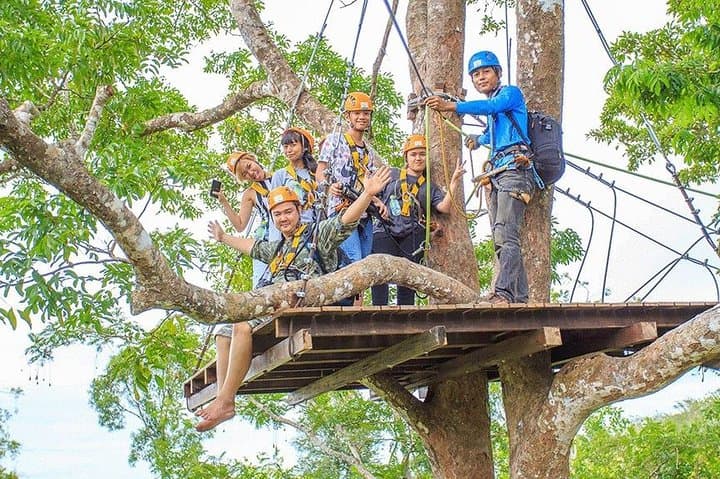
The morning opens under a green cathedral. Damp leaves smell like citrus and earth; sunlight cuts in narrow beams, turning each droplet on the canopy into a tiny, trembling lantern. A guide—quiet, confident, wearing a harness that looks like a second skin—claps his hands and points. Ahead, a wooden platform clings to a tall, ancient tree. Below, the forest roof rolls away in a layered sea of palms and dipterocarps that slopes toward a distant shimmer of sea. This is Phuket not as a resort strip but as a living place: loud with insects, dotted with birdsong, and threaded by a series of ziplines that dare you to move through it.
Phuket’s zipline courses have matured from novelty to a refined way to read the landscape. The Phuket Zipline Adventure Tour operates from a camp set deep in the island’s remnant rainforest. Platforms—custom-built around trunks—connect by steel cables that let you traverse anything from gentle glides to adrenaline-scraping stretches. The operator advertises 10–32 platforms, offering a modular experience that can be tailored to the timid and the hungry-for-more alike. Hotel pickup and drop-off include practicality into the spectacle: you don’t have to find the trailhead, the jungle comes to you.
Geologically and historically, Phuket is an island of contrasts. Once part of an offshore chain, its soils record ancient seas and the uplift that created limestone ridges and hidden coves. Human history here oscillated between quiet agricultural production—rubber and coconut—and a boom-and-bust tin mining era that drew workers, traders and new cultures to the island. The rainforest around the zipline courses is a vestige of that older island ecology, a place where wildlife and old trees still outnumber hotels.
The cultural frame of this tour matters. Many operators partner with local communities, offering employment and a reason to keep patches of forest intact. The camps themselves are built with low-impact designs—wooden platforms, discrete walkways—and guides often point out native species and talk about local conservation. That combination of adrenaline and stewardship is what keeps the tour feeling more like an eco-adventure than a theme-park ride.
What you’ll actually do is straightforward and social. The whole experience runs about three hours, including orientation and multiple ziplines. You’ll be fitted with a helmet and harness, given a safety briefing, and taught braking technique—sometimes the most underrated skill for ziplining. Expect short walks between platforms, a few wooden ladders or stairways, and the surprising stillness at each launch where the forest stretches out in all directions. The thrill is as much spatial—a shifting perspective on scale and distance—as it is kinetic. You’re moving through the rainforest in a way few visitors do, seeing light and shadow, watching birds punctuate the canopy with sudden movement.
Practicalities are clear: the course is well suited to most people who can walk short uneven trails and are comfortable with heights. Guides handle most of the technical work—attaching lines, double-checking gear—and operators follow international safety norms, but do expect to be active. Bring sturdy closed-toe shoes; sandals and flimsy flip-flops will be discouraged. Hydration is essential in Phuket’s heat, even for a three-hour outing, and the operator includes hotel transfers in the booking so your day starts and ends with minimal fuss.
Timing can change the mood. A morning start catches cooler air and brighter bird activity; late afternoon light makes the canopy glow gold. Avoid heavy monsoon days—Thailand’s wet season can turn trails slick and some lines closed. On clear days you’ll sometimes glimpse the Andaman Sea far beyond the treetops; on humid mornings you’ll feel the forest close like a held breath.
For photographers, the course offers instant reward: sweeping vistas, intimate shots of leaf litter and moss, and dynamic frames while in motion. But don’t let gear get in the way—compact cameras, wrist straps and a secure harness-mounted case work best. Most operators prohibit loose items for safety.
Why bother? Because this is a concentrated way to feel the island’s ecology without committing to a multi-day trek. Ziplining here is immediate, social and tactile: you’re physically threaded into the forest and, briefly, in its rhythm. And because the tour is short and accessible, it’s an excellent complement to beach days—a jungle reset that’s easy to add to any Phuket itinerary.
If you plan to go, pick a reputable operator (look for recent reviews and clear safety statements), schedule an early start during the dry season, and arrive curious about the forest. The reward is both instant—speed through sunlit corridors—and reflective: a new vantage point on an island many arrive at for sun and sand but leave remembering for its trees.
Trail wisdom
Small choices, better day.
Book morning departures
Start early for cooler temperatures, clearer skies, and better bird activity.
Wear closed-toe shoes
Sturdy shoes with grip make ladder climbs and short trail walks safer and more comfortable.
Secure loose items
Phones, sunglasses, and hats should be tethered or left at the base—most operators disallow loose items on the lines.
Hydrate before you fly
Bring a bottle and drink ahead of your run—exertion and humidity add up quickly.
Local knowledge
Read the place, not just the route.
Watch for native species including Long-tailed macaque, Tropical hornbills and other canopy birds.
Keep an eye out for wildlife during the transition between areas and habitats. Respect distance guidelines.
Choose operators that invest in reforestation, hire local guides, and limit intrusive infrastructure—these practices reduce impact and support the island’s ecology.
Follow the guide's instructions on size limits, ethical handling, and leave-no-trace practices.
Naka Market in Phuket Town for local snacks and snacks after the tour. Khao Rang viewpoint for sunset panoramas and a lower-key local vibe
Locally recommended viewpoints and quiet spots known best to local operators.
Phuket’s inland forests sit on land shaped by tin-mining and rubber plantations; preserving these pockets of rainforest supports local biodiversity and community livelihoods.
Maritime roots and regional tradition shape the waterways and working coasts.
Seasonal guide
Four versions of the same landscape.
Spring
Best forWarmer weather · Fewer crowds early in season
ChallengesRising temperatures · Early rains begin in May
Spring (March–May) is hot with the rainy season approaching; morning tours are best to avoid heat and storms.
Summer
Best forLush green canopy · Lower mid-week prices
ChallengesMonsoon rains · Possible temporary line closures
Summer brings heavy rain and humidity—expect lush vegetation but plan for potential rescheduling.
Fall
Best forTransitional dry spells · Comfortable afternoons
ChallengesResidual wet ground · Unpredictable showers
Fall (September–November) can be variable; later fall often sees clearer skies and prime canopy viewing.
Winter
Best forCool, dry weather · Best visibility and birdlife
ChallengesHigher tourist numbers · Advance bookings needed
Winter (December–February) is ideal—cool and dry with excellent visibility—book early for peak season.
Operator details
What the booking data adds.
Included
- ✓Drinking water
- ✓Accident Insurance for rider & passenger (ATV damages not covered)
- ✓First Aid Kit
- ✓Join in ATV experience
- ✓Safety equipments
- ✓Round trip transfer from Patong, Kata, Karon, Rawai or Chalong
- ✓Tour Guide
- ✓Raincoat (on rainy days)
Not included
- —Extra Transfer: 300 THB/person (roundtrip) – Phuket Town, Ao Yon, or Panwa.
- —Extra Transfer: 1,400 THB/car (roundtrip) – Kamala, Kathu, Siray Bay, or Leam Hin Pier.
- —Extra Transfer: 1,600 THB/car (roundtrip) – Pakok, Cape Yamu, Surin Beach, or Bangtao Beach.
- —Extra Transfer: 1,600 THB/car (roundtrip) – Cherng Thalay, or Thalang.
- —Extra Transfer: 1,800 THB/car (roundtrip) – Nai Yang, Airport Area, Nai Thon Beach, or Layan Beach
- —Extra Transfer: 2,000 THB/car (roundtrip) – Maikhao Beach Area
Good to know
- ✓Not recommended for travelers with spinal injuries
- ✓Not recommended for travelers with poor cardiovascular health
- ✓Not recommended for pregnant travelers
- ✓Public transportation options are available nearby
- ✓Suitable for all physical fitness levels
- ✓Child ticket age between 4-11 years or less than 130cm in height (proved may be required)
- ✓The zipline trip is not recommended for a person with more than 120 kg., pregnant women, a child under 4 years old and people with a surgical history of fewer than 6 months or with hypertension, asthma, infectious diseases, diabetes, epilepsy, and any mental health condition
- ✓The ATV trip has no weight restrictions. Riders have to be in good physical and mental ability to ensure safety. No alcohol is permitted
- ✓For passengers, make a reservation by specifying a child ticket, and driving is not allowed
- ✓During the tour, riders are asked to strictly follow the tour guide/instructor. The tour operator has the right to stop any risky riding with no refund
- ✓On the rare occasion that we should be required to cancel a tour, we will inform you in advance and offer a different tour date, an alternative tour or provide a full refund
Pack with intention
What to bring.
Good to know
Common questions.
The full experience lasts about three hours, including safety briefing, fittings and multiple ziplines.
Plan the edges
The details that make the day easier.
Phuket is Thailand’s largest island and was historically a major tin-mining center, which shaped settlement patterns and local economies.
After the zipline, head to Phuket Town for lane-side eateries and local seafood—try kanom jeen (rice noodles) for a cooling post-adventure meal or sip a local craft beer at a shaded café to unwind.
- Closest airport
- Phuket International Airport (HKT). Typical drive from tour base to Phuket Town or resort areas: 20–60 minutes depending on hotel location. Cell service: generally reliable near camp but may be spotty under dense canopy. Permits
- passes
- none required; operator booking confirmed via voucher.
Support camps that use low-impact platform construction, employ local guides, and contribute to reforestation—pack out all trash and avoid disturbing wildlife.
Explore by topic
Follow the threads.
Keep exploring
Make the story part of the trip.
Set out from Bass Harbor for a private, customizable day on Blue Hill Bay — lighthouses, puffins, seals, and the chance to feel Acadia from the water. Small groups, local captains, unforgettable views.
In four hours you can move from shaded canyon ferns to wind-scoured coastal ridgelines, guided by someone who knows where the light—and the hidden views—live. This private half-day hike on the Monterey Peninsula or Big Sur is compact, curated, and perfect for travelers who want depth without a multiday commitment.
 Related story
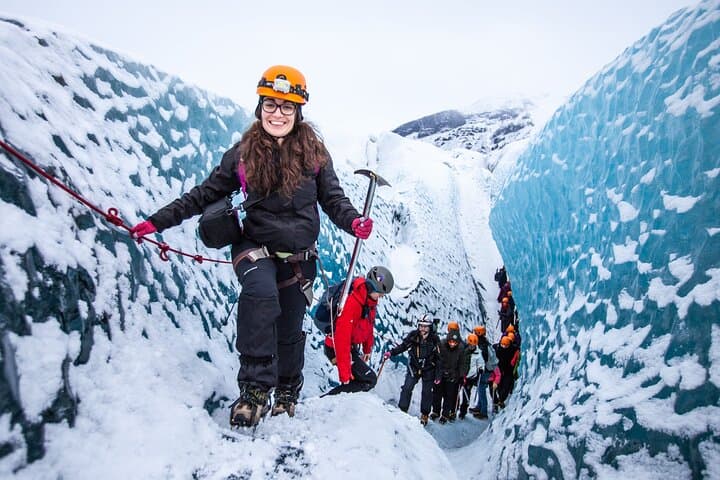
Beneath a sky of shifting light, Skaftafell’s ice reads like a map of time. This three-hour guided glacier hike mixes technical instruction with geology and culture: compact, safe, and unforgettable.