
What the day feels like
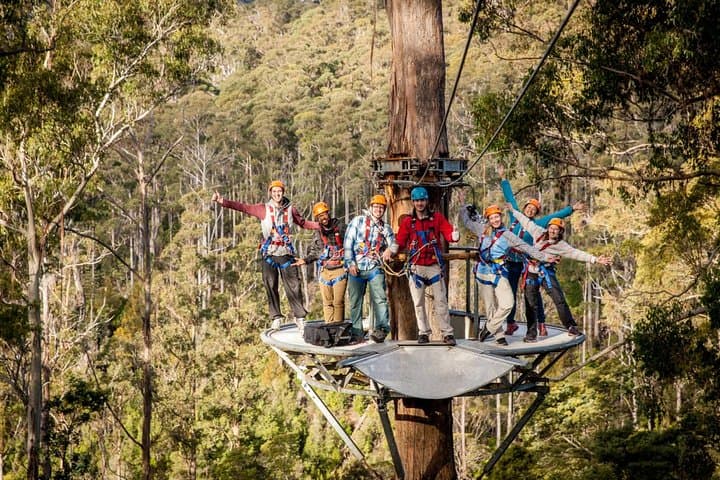
The morning light at Hollybank cuts through a scaffold of eucalypts like a slow-searching headlamp. You step onto the platform and the forest exhales — a cool, sap-sweet breath that carries the scratch of birds and the distant rush of Piper River. Guides tighten harnesses with practiced calm. For the next three hours you trade the steady rhythm of trail hiking for a different cadence: the wind under your chest, the line ahead humming, the treetops rising and falling like waves.
Hollybank’s Canopy Tour is not a stunt; it’s a sequence of deliberate moments stitched across platforms and cables: short zips that tease speed, longer flights that force you to look straight out over the slope and accept the view. The crown jewel is Australia’s longest zipline on this course — a 400-meter run that carries you 50 meters above the forest floor, skimming the gorge toward the Piper River. From up there you read the landscape in cross-section: basalt outcrops, a green ceiling of understorey, and the subtle silver thread of water that carved the hollow below.
This is Northern Tasmania’s quieter half — Launceston spreads downstream along the Tamar River, but here the land leans inward, to steeper gullies and private reserves. Hollybank itself sits in a patchwork of managed forests and native bush, a modern attraction stitched into countryside shaped by centuries of Aboriginal stewardship and, since the 1800s, logging, farming, and small-scale industry. The treetops feel ancient, but the infrastructure beneath your feet is newer: platforms and cables designed to move people gently through canopy strata with minimal ground impact.
Geology is subtle but present: the soils, born of basalt and dolerite flows that make Tasmania’s inland a mosaic of fertile pockets and rocky ridges, influence which species take root. Eucalypts dominate, their pale trunks and flaking bark a familiar contrast to the deep green of myrtle and sassafras. Birdsong is the soundtrack — rosellas, crescent honeyeaters — and you might spot wallabies at the forest edge where cut paddocks let the light in.
Culture here is a low-key affair. Launceston is one of Australia’s oldest regional cities, a base for exploring Tamar Valley wineries and the Cataract Gorge, but at Hollybank you feel less tourist circuit and more local weekend. Guides are typically Tasmanian, practical, and patient; they’ll point to a favored ridge, explain the river’s seasonal mood, or joke about the quiet rivalry between zipline operators for the best photo angle. The operation also leans toward environmental care: routes avoid sensitive ground trails, platforms are clustered to limit tree impact, and the experience includes interpretive notes about the forest you’re flying through.
Why travelers come is simple. If you want a brisk dose of adrenaline within arm’s reach of Launceston, this is it — accessible, escorted, and engineered for a broad range of fitness levels. The long runs reward a moderate appetite for motion; the shorter links keep the experience playful and social. Photography is integral but practical: guides include a digital photo package, which lets you focus on the ride while professionals capture the angles that matter.
Practical edge: the tour is about 3 hours from check-in to finish, with a bit of walking between platforms and some stairs to reach platforms. Expect a moderate physical demand — you don’t need climbing experience, but you should be comfortable with short bursts of activity and being clipped into a harness. Footwear that grips, a light daypack, and layered clothing are the basics. In Tasmanian weather, “packing for microclimates” is a good motto: sun one minute, drizzle the next, cool under canopy.
Timing matters. Spring and autumn bring milder temps and crisp visibility; summer is drier and busier; winter is quieter but can be cool and windy, particularly on the longer lines. Bookings are limited to small groups (tours cap at 12 guests), so reservations are sensible in peak season. Launceston is a short drive away — an easy logistical pin on any Northern Tasmania itinerary that also includes Cataract Gorge, Tamar Valley wine tastings, and day hikes in Ben Lomond or the Narawntapu coast.
For the active traveler who wants both narrative and nuance, Hollybank delivers: a sequence of sensations that connects motion, place, and perspective. It’s not about the highest thrills so much as a tidy, well-crafted traversal of a Tasmanian forest you can also learn to read. The long zipline over Piper River has the kind of unhurried airtime that allows appreciation over panic; the guides create space for quiet observation as much as for whoops. Step onto the platform, take a breath, and let the canopy do the rest — in three hours you’ll have a better sense of Tasmania in profile: the geology, the forest, the human choices that protect and use such places, and the simple, exact pleasure of moving through it.
Trail wisdom
Small choices, better day.
Layer for microclimates
Temperatures vary under canopy and on exposed lines—bring a light windbreaker you can stash in a small pack.
Grip-first footwear
Use closed-toe shoes with good traction; platforms and access stairs can be wet or muddy.
Book early for photo windows
Tours cap at 12 guests and include digital photos—reserve morning slots for softer light and less wind.
Listen to guides for safety and wildlife notes
Guides control line timing and can point out native birds and conservation practices—follow instructions for smooth runs.
Local knowledge
Read the place, not just the route.
Watch for native species including Eastern grey kangaroo, Green rosella (native parrot).
Keep an eye out for wildlife during the transition between areas and habitats. Respect distance guidelines.
The treetops operation minimizes ground disturbance by clustering platforms and uses interpretive education to reduce visitor impact; visitors are encouraged to stay on designated paths and pack out waste.
Follow the guide's instructions on size limits, ethical handling, and leave-no-trace practices.
Walk the shorter signed trails at Hollybank Reserve for quiet birdwatching. Stop at a local Tamar Valley cellar door on the way back to Launceston for cool-climate wines
Locally recommended viewpoints and quiet spots known best to local operators.
Launceston, settled in the early 1800s, sits at the head of the Tamar estuary; the surrounding forests have long histories of Aboriginal use and later European timber harvesting.
Maritime roots and regional tradition shape the waterways and working coasts.
Seasonal guide
Four versions of the same landscape.
Spring
Best forWildflower displays · Moderate temperatures · Birdwatching
ChallengesOccasional rain showers · Variable mud on access trails
Spring brings fresh growth and good visibility; expect cool mornings and occasional showers that make the forest scentier and the trails softer.
Summer
Best forLonger daylight hours · Stable weather · Family bookings
ChallengesPeak crowds · Higher temperatures and sun exposure
Summer is warm and busy—ideal for extended daylight itineraries but book ahead and bring sun protection for exposed sections.
Fall
Best forCrisp clear days · Foliage contrast · Comfortable trekking
ChallengesShorter daylight · Chillier mornings
Autumn yields clean air and vivid contrast in the canopy; temperatures drop earlier in the day, so layer up for morning starts.
Winter
Best forFewer crowds · Brisk clear views on calm days · Lower rates
ChallengesChilly winds on long zips · Possible wet weather and closures
Winter can be quiet and atmospheric but dress warmly and confirm operations in advance—some runs may be affected by wind or heavy rain.
Operator details
What the booking data adds.
Included
- ✓Professional guide
- ✓Helmet, harness & training
- ✓Locker Hire
Not included
- —Food and drinks (available for purchase)
- —Gloves must be purchased at the park
Good to know
- ✓Not recommended for pregnant travelers
- ✓Not recommended for travelers with poor cardiovascular health
- ✓Suitable for all physical fitness levels
- ✓Tour session will be confirmed when request is received.
- ✓Children aged 8-15yrs must be accompanied by an adult
- ✓Canopy Tour Weight limit: up to 135kg. Participants under 40kg or under 7 will be required to ride tandem.
- ✓Spectators are free and welcome onsite
- ✓Vegetarian option is available, please advise at time of booking if required
- ✓Closed toe footwear and comfortable clothing. Avoid skirts or dresses
Pack with intention
What to bring.
Good to know
Common questions.
The guided canopy tour runs about 3 hours from check-in to finish, including briefing, gearing up, and photo stops.
Plan the edges
The details that make the day easier.
Hollybank’s Canopy Tour includes a 400-meter zipline—one of the longest commercial ziplines in Australia—soaring roughly 50 meters above the forest floor and Piper River.
After the tour, head back to Launceston for coffee at the Seaport or a meal at Stillwater for local produce; the Tamar Valley’s cellar doors are minutes away if you’d prefer a wine tasting to wind down.
- Closest airport
- Launceston Airport (LST) ~30–40 min drive; Trailhead
- meeting point
- Hollybank Treetops Adventure reserve entrance; Driving distance from Launceston CBD: ~25–35 minutes; Cell service: patchy under dense canopy; Permits: none, but tour reservation required.
The operator concentrates platforms to reduce ground erosion and educates guests on Leave No Trace principles—please pack out any rubbish and stick to designated paths to protect habitat.
Explore by topic
Follow the threads.
Keep exploring
Make the story part of the trip.
 Related story
Less than two hours from Nairobi, Kereita Forest pairs hands-on canopy adventure with quiet montane trails and a sobering colonial history—perfect for families, teams, and curious travelers seeking a full-day pulse of nature.
Set out from Bass Harbor for a private, customizable day on Blue Hill Bay — lighthouses, puffins, seals, and the chance to feel Acadia from the water. Small groups, local captains, unforgettable views.
In four hours you can move from shaded canyon ferns to wind-scoured coastal ridgelines, guided by someone who knows where the light—and the hidden views—live. This private half-day hike on the Monterey Peninsula or Big Sur is compact, curated, and perfect for travelers who want depth without a multiday commitment.