
What the day feels like
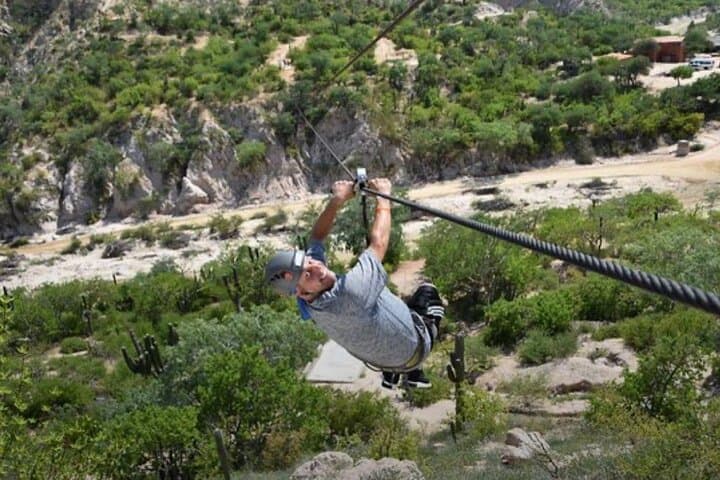
You step onto the first launch platform and the canyon opens up beneath you like a folded map — rust-red scrub, ribboned arroyo, a distant glint of Pacific where land stops and ocean begins. The harness hums at your thighs; the guide checks your carabiner with a calm precision that makes the machinery of adrenaline feel routine. Then you go: the world compresses into wind, the zipline pulling you along a corridor of sage and ocotillo, and for a moment the peninsula seems to tilt toward the Sea of Cortez.
This is the shorthand of the Outdoor and Zipline Adventure in Baja California: four hours, half a dozen ziplines, a short interpretive nature walk and, at the end, a small tasting of Damiana — the local, sweet-smelling herb distilled by artisans across southern Baja. It’s a tidy package of lift-and-drop thrills framed by the peninsula’s slow-moving geology and a coastal culture that prizes improvisation as much as hospitality.
Geology and place matter here. The cliff edges you fly over are part of a landscape written by tectonic patience: granite intrusions and volcanic seams laced into arroyos that flush with seasonal rain. The canyons are dry most of the year but alive with microhabitats — nurse trees shading cooler soil, lichen-furred rocks catching a coastal breeze. Historically, these coastal fringes were lived in and traveled by the Pericú people long before Spanish missions stitched ranches and villages into Baja’s map. Today you’ll sense that human thread in the small-scale agriculture, the ranch gates, and the artisanal Damiana that caps the tour — a taste of place that’s both botanical and cultural.
What the itinerary doesn’t promise is a long slog. The walking portions are short (expect roughly 1–2 kilometers of trail in total, over uneven desert footing with about 100–200 meters of cumulative ascent and descent); the ziplines do the heavy lifting of elevation and exposure. That makes the tour a good fit for people who want height and speed without a full day in the sun or a mountaineering skill set. Guides handle the technical side — harnessing, tandem lines for newcomers, and quick briefings — so most participants need only a steady pair of legs and the willingness to step off a platform.
Practical specifics matter. The tour runs about four hours (the operator lists a fixed duration of 240 minutes) and typically includes hotel pick-up and drop-off in the Cabo San Lucas area. Cost starts around USD 130 per person; booking is instant and often includes free cancellation up to a defined window. Expect groups that blend families and adventure-seekers: the zipline system is engineered to accommodate a range of ages, but there are minimum/maximum weight limits and health considerations that the operator will screen for in advance.
Timing can make or break the experience. Mornings are cooler, the light is clean and the winds offshore usually calmer — an advantage on exposed lines — so aim for first- or second-shift departures. Bring sun protection (wide-brim hat for between lines, SPF, and long-sleeve options) and closed-toe shoes with good tread: platforms and approach trails are short but rocky. Hydration matters more than you think; pockets of shade are limited and the desert sun will outwork you without frequent sips.
Beyond the adrenaline, there’s a quieter payoff: the interpretive walk between ziplines is where you meet Baja’s flora and the guide’s pared-down stories about ranching, salt harvests, and the curious history of Damiana. The tasting at the end isn’t just a novelty; it’s a small lesson in how local plants feed local economies. Opt to buy a small bottle if you want a tasting memory — it’s a good souvenir that supports local producers.
For photographers, the lines offer obvious angles: long exposures that blur riders into streaks against a crisp canyon, telephoto compression of layered ridgelines, and golden-hour washes that warm the rocks to copper. But some of the best images are quiet: close-ups of barrel cactus spines backlit by low sun, or the tired hands of a guide adjusting a harness.
Safety is engineered in, but common sense completes the picture. Follow the guide’s instructions, avoid loose jewelry and scarves on lines, and disclose any recent injuries or heart conditions ahead of time. Operators are experienced, but the desert is unforgiving if you underestimate sun, wind, or dehydration.
Why go? Because this outing distills Baja into a half-day: it marries the visceral rush of altitude with a compact primer on local ecology and craft. For families, it’s an accessible dose of adventure; for repeat visitors to Cabo San Lucas, it’s a way to see an inland slice of the peninsula you won’t find from the marina. And for anyone who likes a story with their adrenaline — geology, a plant-based tasting, and the slow human history of a place — this tour stitches them together into a satisfying, doable morning or afternoon.
If you’re planning it: book mornings in shoulder seasons (spring and fall), bring closed-toe shoes, and leave room in your bag for a small bottle of Damiana. The ziplines will demand your courage, the canyon will demand your attention, and the tasting will ask you to slow down and savor where you’ve just cut across the map.
Trail wisdom
Small choices, better day.
Morning Runs Best
Book an early departure to avoid afternoon winds and the strongest sun.
Footwear Matters
Sturdy, closed-toe shoes with good tread will keep you steady on rocky approaches and launch platforms.
Hydrate Proactively
Bring a refillable bottle and sip often—the desert sun dehydrates faster than it feels.
Pack Light, Secure Cameras
Phones and small cameras are fine, but secure straps and keep loose items zipped—operators may restrict handheld gear on faster lines.
Local knowledge
Read the place, not just the route.
Watch for native species including Cactus wren, Desert hare (liebre).
Keep an eye out for wildlife during the transition between areas and habitats. Respect distance guidelines.
The arid canyon ecosystems are sensitive—stay on marked trails, avoid removing plant material, and choose operators that limit habitat disturbance.
Follow the guide's instructions on size limits, ethical handling, and leave-no-trace practices.
Short viewpoint trails off the main course with less foot traffic and great sunset vantage. Small family-run distilleries producing Damiana liqueur—ask your guide for recommendations
Locally recommended viewpoints and quiet spots known best to local operators.
Southern Baja has long been home to indigenous groups and later Spanish missions; the region’s ranching and fishing traditions still shape local life.
Maritime roots and regional tradition shape the waterways and working coasts.
Seasonal guide
Four versions of the same landscape.
Spring
Best forClear skies · Wildflowers · Moderate temperatures
ChallengesOccasional seasonal winds · Higher demand on weekends
Spring balances warm days with manageable winds—ideal for clarity on the ziplines and blooming desert plants.
Summer
Best forFewer crowds · Lush after-rain growth · Longer daylight
ChallengesHigh heat · Possibility of summer storms
Summer brings heat; early starts are essential and afternoon storms can close exposed lines.
Fall
Best forStable weather · Golden light · Good water clarity near coast
ChallengesOccasional tropical storm influence · Peak visitor season holidays
Fall is a sweet spot—mild weather and excellent lighting—though you’ll want to avoid hurricane windows.
Winter
Best forCool mornings · Whale-watching offshore · Off-season rates
ChallengesCooler winds on exposed lines · Bigger cruise-season crowds
Winter can be cool and windy but is popular for visitors; layers and a wind shell make it comfortable.
Operator details
What the booking data adds.
Included
- ✓safety wear and gloves
- ✓Park Entrance Fee
- ✓guide
- ✓Air-conditioned vehicle
- ✓Damiana and tequila tasting
Not included
- —Alcoholic Beverages
- —Lunch
- —photos and videos
- —tips
Good to know
- ✓Not recommended for travelers with spinal injuries
- ✓Not recommended for pregnant travelers
- ✓Not recommended for travelers with poor cardiovascular health
- ✓Travelers should have at least a moderate level of physical fitness
Pack with intention
What to bring.
Good to know
Common questions.
The tour is approximately 4 hours from hotel pickup through return; time on ziplines plus a short nature walk and Damiana tasting are included.
Plan the edges
The details that make the day easier.
Damiana (Turnera diffusa) is a shrub native to Baja California and the northern parts of Mexico; locals have used it for centuries and it is traditionally distilled into a sweet herbal liqueur.
After the tour, head back toward Cabo San Lucas’ marina for fresh ceviche or fish tacos and a cold cerveza; look for small markets selling Damiana products and handmade leather goods to connect the adventure with local crafts and flavors.
- Closest airport
- Los Cabos International Airport (SJD) — 30–60 minute drive to most zipline operators from Cabo San Lucas; cell service: intermittent in canyon and on-course; permits: none typically required; trailhead: private operator site; confirm hotel pickup
This dryland canyon is ecologically fragile—pack out trash, use refillable water bottles, and support operators that follow low-impact guidelines and wildlife-safe practices.
Explore by topic
Follow the threads.
Keep exploring
Make the story part of the trip.
Set out from Bass Harbor for a private, customizable day on Blue Hill Bay — lighthouses, puffins, seals, and the chance to feel Acadia from the water. Small groups, local captains, unforgettable views.
In four hours you can move from shaded canyon ferns to wind-scoured coastal ridgelines, guided by someone who knows where the light—and the hidden views—live. This private half-day hike on the Monterey Peninsula or Big Sur is compact, curated, and perfect for travelers who want depth without a multiday commitment.
 Related story
Beneath a sky of shifting light, Skaftafell’s ice reads like a map of time. This three-hour guided glacier hike mixes technical instruction with geology and culture: compact, safe, and unforgettable.