
What the day feels like
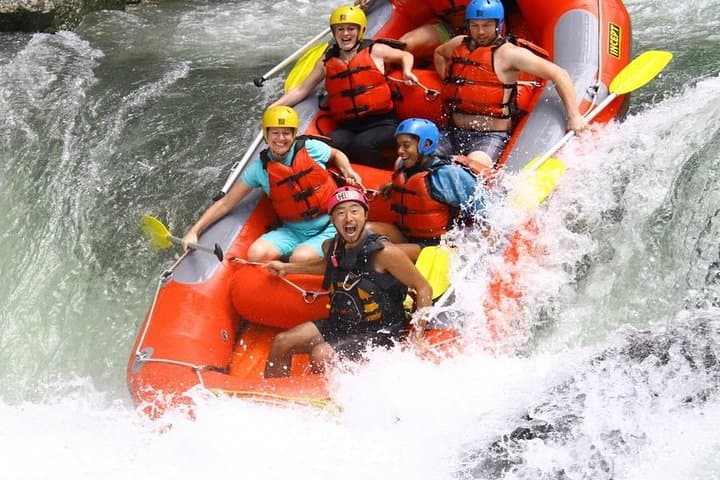
By midmorning the air tastes like wet jungle and hot metal — the river ahead cools both. You step off the camp’s wooden landing with a guide who speaks in calm, practiced sentences and a smile that reads as both reassurance and invitation. The raft bobs like a living thing, impatient and buoyant, waiting for you to climb on. For the next five kilometers the river will pull, push, and sometimes cajole you forward: a brief, uncomplicated tumble through Phang Nga’s lowland forest that makes a day of travel from Phuket feel sharply earned.
This is not an expedition that asks for weeks of training or complex gear. The Whitewater Rafting 5 KM Only trip out of Phuket is a compact, well-paced introduction to Thailand’s inland waterway recreation — a sensible mix of adrenaline and easygoing riverside downtime that suits families, pairs, and solo travelers wanting a break from beaches. You’re picked up early in an air-conditioned minibus, cross the causeway and pineapple farms, and make a ritual stop at Monkey Cave temple. It’s a short cultural beat: incense, statues, a quick stretch of the legs before you arrive at Camp Songprak in Phang Nga Province where coffee and shade are waiting.
Geologically, Phang Nga Province is primarily known for its dramatic limestone karsts rising from the sea, but inland the landscape is gentler: low ridges, broad river valleys, and a green, humid canopy that feeds the waterways. This river run traces a short corridor of that green, moving from shady pools into riffles and little drops that are all about rhythm and timing rather than technical challenge. Guides run through an on-shore briefing and basic paddle technique before you shove off, and the 5-kilometer length means the experience remains concentrated — long enough to feel like an outing, short enough to leave you refreshed rather than exhausted.
Culturally, a rafting day is a cross-section: the limestone and the rivers that shaped local settlements, the temples you pass on the approach, and the food at the camp — a home-style Thai lunch served around 12:30 — that tastes like the region: jasmine rice, vibrant curries, and seafood when it’s available. The guide’s jokes and the clatter of paddles mix with the distant sounds of village life, and there’s a rare kind of intimacy: you and your raft against a landscape that’s used to being watched by tourists from boats far larger and quieter than you.
For planning, the itinerary is tidy. Pickup windows are roughly 07:15–07:45 from Phuket hotels. Expect a stop at Monkey Cave temple around 09:30 and arrival at Camp Songprak by 10:00. Briefing and raft training begin at 11:00; the river run is the 5-kilometer section downstream; lunch is served at about 12:30. After some free time to relax on the river, you leave camp at 15:00 and return to hotels in Phuket by roughly 17:00. The price starts from about USD 51.37, covering transfers, the raft, lifejackets, instruction, and lunch — a reasonable rate for a full-day door-to-door experience.
Practical realities: come prepared to get wet and to appreciate how a short run can be deceptively satisfying. The run includes a mix of calmer stretches for floating and brief rapids that require teamwork more than technical skill. It’s a good introductory raft for first-timers, small groups, and families with older children. The guides do the risky stuff; your job is to follow commands, lean in with your comrades, and enjoy the river’s personality — sometimes playful, sometimes insistent.
Hydration and sun protection matter more than you’d expect for a trip that begins pre-dawn and spends midday on the water. Bring a dry bag for phones and a light windbreaker for the return. Footwear that won’t slip off when wet — dedicated water shoes or sandals with straps — will save you from cold plastic flip-flops mid-rapids. And while the lunch is generous, pack a small snack if you’re prone to afternoon hunger between the run and the return drive.
If you want to deepen the day, ask your operator about longer runs nearby or private-group upgrades; otherwise, use the free time after lunch to float quietly and listen. Rivers have a way of promising small revelations: a sudden birdcall, a tuk-tuk’s distant diesel pulse, a sun shaft through the canopy that seems to hang in place. That’s the charm of a short day-trip in Phang Nga — it gives you one distinct slice of the inland landscape while leaving room in your itinerary for the islands and beaches that brought you to Phuket in the first place.
Why go? Because it’s efficient adventure: a full-day experience that mixes cultural stops, a coached aquatic adventure suitable for most travelers, and a riverside lunch that restores you. It’s a compact, real taste of Thai river running that won’t require an extra night’s logistics. For travelers who want to punctuate a beach holiday with something active and locally rooted, this 5-kilometer run is exactly that kind of clean, gratifying pause.
Final note: respect the river and your guides. The run is short, but it’s happiest when everyone follows instructions, leaves no trace, and treats camp and riverbank with care. Do that, and you’ll leave with wet clothes, good photos, and a clearer sense of Phang Nga beyond the postcard karsts.
Trail wisdom
Small choices, better day.
Wear secure water shoes
Choose shoes with straps or dedicated water shoes — flip-flops can slip off during maneuvers.
Bring a dry bag
Protect phones, wallets, and cameras in a small dry bag; most operators don’t provide secure waterproof storage.
Sun protection matters
Use broad-spectrum sunscreen and a hat for the transfer and riverside lunch; reapply after rafting.
Listen to the guide
Briefings cover safety and simple paddle commands — following them keeps the run fun and safe for everyone.
Local knowledge
Read the place, not just the route.
Watch for native species including Kingfishers, Monitor lizards.
Keep an eye out for wildlife during the transition between areas and habitats. Respect distance guidelines.
Operators tend to enforce leave-no-trace practices at camps; avoid sunscreen and soaps that can enter freshwater and ask guides about waste handling.
Follow the guide's instructions on size limits, ethical handling, and leave-no-trace practices.
Camp Songprak’s riverside hammocks for a post-lunch nap. The short trail behind camp to a lookout often missed by day-trippers
Locally recommended viewpoints and quiet spots known best to local operators.
Phang Nga Province has long been a crossroads between mainland Siam and the Andaman coast; inland rivers supported local agriculture and small settlements that predate modern tourism.
Maritime roots and regional tradition shape the waterways and working coasts.
Seasonal guide
Four versions of the same landscape.
Spring
Best forFewer international crowds · Warmer water temperatures
ChallengesRising daytime heat · Occasional early showers
March–May warms up; expect hotter days and comfortable river temps — early starts help avoid peak heat.
Summer
Best forLush, green scenery · Lower prices in shoulder months
ChallengesMonsoon rains and heavier flows · Possible short cancellations due to weather
June–August is wetter; river levels can rise and sections may be more turbulent — operators monitor conditions closely.
Fall
Best forDramatic rain-fed rivers · Fewer tourists late season
ChallengesUnpredictable storms · muddy access roads at times
September–November is transition to wet season; be flexible with scheduling and expect occasional delays.
Winter
Best forDry, sunny days · Calmer river sections ideal for families
ChallengesHigher tourist numbers · Book early in peak months
November–February is the dry season — the most reliable time for a day trip from Phuket with lower rain risk.
Operator details
What the booking data adds.
Included
- ✓Bottled water
- ✓Lunch
- ✓English Speaking Guide
- ✓Air-conditioned vehicle
- ✓Insurance
- ✓Coffee and/or Tea
Good to know
- ✓Public transportation options are available nearby
- ✓Infants are required to sit on an adult’s lap
- ✓Specialized infant seats are available
- ✓Not recommended for travelers with spinal injuries
- ✓Not recommended for pregnant travelers
- ✓Not recommended for travelers with poor cardiovascular health
- ✓Travelers should have at least a moderate level of physical fitness
Pack with intention
What to bring.
Good to know
Common questions.
No — guides provide a clear safety briefing and basic paddle instruction suitable for first-timers.
Plan the edges
The details that make the day easier.
Phang Nga Bay’s iconic limestone island Ko Tapu ("James Bond Island") was featured in the 1974 film 'The Man with the Golden Gun' and helped bring international attention to the region.
After the run, head back toward Phuket for fresh seafood along the west coast or stop in Phang Nga Town for simple southern Thai dishes; roadside stalls serve strong coffee and grilled snacks that hit the spot after a day on the water.
- Closest airport
- Phuket International Airport (HKT); Typical drive time: ~1–1.5 hours from Phuket hotels; Cell service: good on roads, intermittent in river valleys; Permits
- passes
- none required for the activity; Meeting point: hotel pickup, Camp Songprak is the on-river base.
This river corridor is locally managed — pack out trash, avoid non-biodegradable soaps in the water, and choose operators that limit single-use plastics.
Explore by topic
Follow the threads.
Keep exploring
Make the story part of the trip.
 Related story
Less than two hours from Nairobi, Kereita Forest pairs hands-on canopy adventure with quiet montane trails and a sobering colonial history—perfect for families, teams, and curious travelers seeking a full-day pulse of nature.
Set out from Bass Harbor for a private, customizable day on Blue Hill Bay — lighthouses, puffins, seals, and the chance to feel Acadia from the water. Small groups, local captains, unforgettable views.
In four hours you can move from shaded canyon ferns to wind-scoured coastal ridgelines, guided by someone who knows where the light—and the hidden views—live. This private half-day hike on the Monterey Peninsula or Big Sur is compact, curated, and perfect for travelers who want depth without a multiday commitment.