
What the day feels like
You step out of the van and the Adriatic rearranges the air. It’s cooler a few kilometers inland from Rovinj’s old town—salt softened by vineyards and the warm, mineral breath of terra rossa soil. Rows of vines march up a gentle slope toward a low stone house where Stancija Collis has quietly turned winemaking into a small ritual. The first thing you notice is the view: green vines folding into olive trees, the glitter of islands off the coast, and a cellar door that smells faintly of earth and oak.
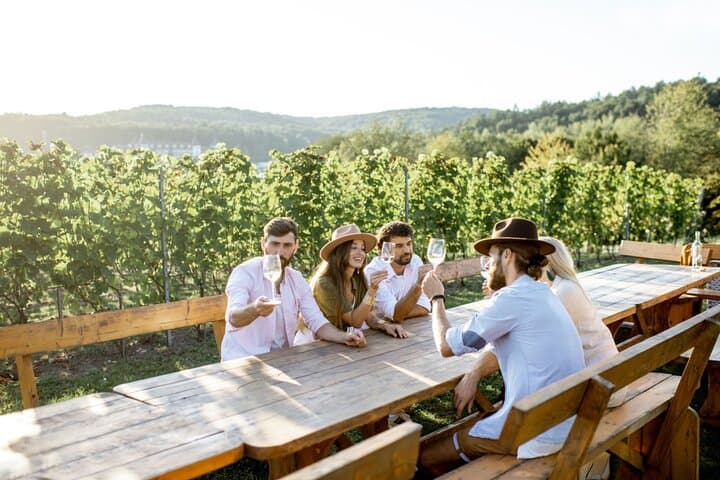
What Collis does best is make you feel why Istria has been a wine place for millennia. The walk through the vineyard is leisurely and specific: a guide points out Malvazija Istarska leaves cupping morning light, the thicker skins of Teran clusters waiting for their September sun, and a patch of limestone outcrop that explains the grapes’ mineral backbone. The tasting that follows is intimate—three to five wines, depending on the season, poured at a shaded table with artisanal morsels from nearby family farms. There’s no pretense, only a steady, confident sense of place: wines shaped by red soil, Bura wind, and a coastline that tempers summer heat.
Istria’s wine story is long and layered. Romans planted vines here, Venetians ran trade routes along the coast for centuries, and small family estates preserved local varieties through shifting borders. Geologically, the peninsula is a mosaic of karst limestone capped by iron-rich terra rossa that gives the grapes a bright acidity and saline lift—qualities you’ll taste in a chilled Malvazija and in the firmer reds bred for food. Collis sits in that intersection of geology and tradition; it’s modern in cellar technique yet anchored to local varietals and small-scale agriculture.
The cultural rhythm matters: this is agritourism, not a theme park. The tasting is often paired with prosciutto from an adjacent farm or cheese from a neighboring producer, emphasizing how connected Istrian tables are to the land. Because Stancija Collis operates private tours, the experience feels like being invited into a family’s weekend: you learn how vines are pruned, how terroir alters fermentation decisions, and why a winemaker might choose old oak barrels over stainless steel for a particular cuvée.
Practicalities are straightforward. The tour runs about three hours—ample time for a vineyard walk, cellar visit, and a relaxed tasting. The route to Collis from central Rovinj is short: a 10–20 minute drive depending on traffic. Many travelers combine this with a morning in Rovinj’s cobbled old town and a late afternoon swim along the coastline. Prices reflect the private, curated nature of the visit; it’s an investment in time, knowledge, and the small-production wines you’ll be sampling.
For those planning the trip: go during shoulder seasons if you want fewer crowds and mild weather. Come prepared to walk on uneven ground—stone terraces and gravel paths are part of the charm. Bring a light layer for coastal breezes and a daypack for camera, water, and a place to hold purchases if you decide to bring bottles home. If you’re traveling in September, you may see harvest activity; March to May shows the vineyards leafing out, and June to August serves up full summer sun.
Beyond the tasting, there are layers of reward. Drive back to Rovinj for seafood on the harbor, or detour to a truffle-focused konoba for Istrian prosciutto and homemade fuži pasta. Collis is a gateway to the region’s food culture as much as a place to drink—what you taste echoes in the small plates that define Istrian dining.
Who should book Collis? Casual travelers who want an authentic, small-scale wine experience; wine lovers eager to explore indigenous varieties; and anyone drawn to slow, sensory tourism—where the landscape, history, and a focused tasting combine into a three-hour story. The tour doesn’t demand athleticism, but it rewards curiosity. Ask questions about soil, ask why a wine was aged in a particular way, and don’t be shy about requesting a second pour of the bottle that surprises you. Collis is built for conversation.
Finally, leave room for the unexpected. The light here changes quickly—morning clarity, golden late-afternoon haze—and that variability is part of why Istrian wines feel alive. Whether you’re tracing the tannins of a young Teran or savoring the citrus finish of a coastal Malvazija, the experience is less about ticking boxes and more about feeling how sea and soil converses in a glass.
Trail wisdom
Small choices, better day.
Book the private slot
Collis operates private tours—reserve in advance, especially in late summer and harvest season.
Wear sturdy shoes
Vine rows and cellar floors are uneven; closed-toe shoes improve comfort during the walk.
Hydrate between pours
Sip water between tastings to reset your palate and stay hydrated in warm months.
Bring a light layer
Coastal breezes make mornings and evenings cool; pack a light jacket for comfort.
Local knowledge
Read the place, not just the route.
Watch for native species including Bottlenose dolphins offshore, Herons and other coastal birds in marshy coves.
Keep an eye out for wildlife during the transition between areas and habitats. Respect distance guidelines.
Many Istrian wineries practice small-scale, low-intervention farming; support local producers and avoid single-use plastics when visiting.
Follow the guide's instructions on size limits, ethical handling, and leave-no-trace practices.
Punta Corrente (Golden Cape) forest park for a seaside walk after your tasting. Small konobas inland offering pasta with truffles and family-made prosciutto
Locally recommended viewpoints and quiet spots known best to local operators.
Istrian viticulture dates back to Roman times; the region later thrived under Venetian trade routes that shaped its culinary and wine traditions.
Maritime roots and regional tradition shape the waterways and working coasts.
Seasonal guide
Four versions of the same landscape.
Spring
Best forLush vineyard views · Milder tasting conditions
ChallengesOccasional rain showers
Spring brings green vines and comfortable temperatures—expect damp ground after rains and a lively landscape.
Summer
Best forOpen-air tastings · Pairing with local seasonal produce
ChallengesHigh sun and heat · Busy tourist period
Long, sunny days are ideal for vineyard strolls, but bring sun protection and book early to avoid crowds.
Fall
Best forHarvest activity · Full-bodied reds
ChallengesUnpredictable weather during harvest
Autumn is harvest season—vibrant and busy, with excellent chances to see winemaking in action and taste fresh vintages.
Winter
Best forQuieter visits · Cellar-focused explanations
ChallengesCooler temperatures; limited outdoor tasting
Winter is low season—tastings move indoors and offer a more intimate, behind-the-scenes cellar experience.
Operator details
What the booking data adds.
Included
- ✓Deluxe Tasting Menu
- ✓Professional local tour guide
- ✓Transportation
Good to know
- ✓Suitable for all physical fitness levels
Pack with intention
What to bring.
Good to know
Common questions.
The standard tour runs approximately three hours and includes a vineyard walk, cellar visit, and guided tasting with local pairings.
Plan the edges
The details that make the day easier.
Istria’s signature white grape, Malvazija Istarska (Malvasia), is indigenous to the peninsula and has been cultivated here since Roman times—a cornerstone of local wine identity.
After your tasting, head back to Rovinj’s waterfront for grilled seafood and a cold beer, or inland to a konoba for truffle-hunting menus and Istrian prosciutto—both pair beautifully with Collis wines.
- Closest airport
- Pula Airport (~35 km). Typical driving time from Rovinj: 10–20 minutes. Cell service: generally good. Permits: none for tastings. Meeting point: usually at the winery (some tours offer pickup).
Many small Istrian wineries, including Collis, emphasize low-intervention methods—support sustainable producers, avoid bringing single-use plastics, and take only photographs and memories from the land.
Explore by topic
Follow the threads.
Keep exploring
Make the story part of the trip.
 Related story
Less than two hours from Nairobi, Kereita Forest pairs hands-on canopy adventure with quiet montane trails and a sobering colonial history—perfect for families, teams, and curious travelers seeking a full-day pulse of nature.
Set out from Bass Harbor for a private, customizable day on Blue Hill Bay — lighthouses, puffins, seals, and the chance to feel Acadia from the water. Small groups, local captains, unforgettable views.
In four hours you can move from shaded canyon ferns to wind-scoured coastal ridgelines, guided by someone who knows where the light—and the hidden views—live. This private half-day hike on the Monterey Peninsula or Big Sur is compact, curated, and perfect for travelers who want depth without a multiday commitment.