
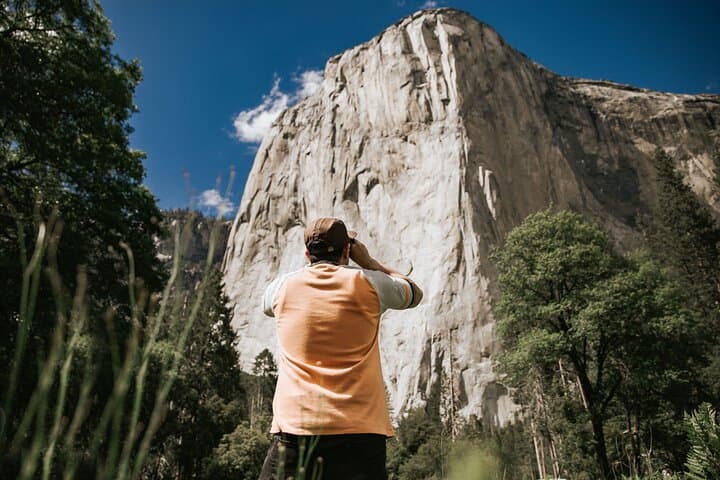
What the day feels like
You leave the city while it's still dim—fog clinging to the Golden Gate like a last-minute excuse to linger—and the road unspools into the interior: oak-studded hills, highway coffee stops, and a growing appetite for vertical landscapes. By late morning, granite appears on the horizon the way a city skyline does: sudden, undeniable. Tunnel View gives you the first cinematic breath of Yosemite Valley—El Capitan on the left, Bridalveil Fall flickering on the right, and Yosemite Falls stitching white into blue. For five hours the park is yours to roam: the tour strings together the classic sights and hands you a rare kind of efficiency—early entry, a measured itinerary, and free offline audio guides so context arrives the instant you need it, even when your phone refuses to find a signal.
This is a day built around contrasts. Granite cliffs that read as a single block from a distance break into textures at close range—fractures, lichens, black streaks where water has carved paths. Waterfalls are theatrical, at their best in spring when snowmelt sizes up and tumbles down in full voice. And then there are the sequoias: slow, deliberate giants that read like living architecture. Walking the Tuolumne Grove is a study in scale; the trees keep you honest about perspective. A single trunk can make you feel like a child again, smaller in a neutral, humbling way. Nature here has personality. The Merced River dares you to keep pace; the valley pines stand like quiet sentinels; the sequoias seem to cradle centuries.
Yosemite's story is geological as much as it is scenic. The valley is the product of glaciers that, during the last ice ages, gouged U-shaped canyons from granite bedrock—an artist’s hand of slow, abrasive industry. The same forces polished monoliths like Half Dome and set the stage for dramatic waterfalls, which are really the leftover temper tantrums of a landscape still reshaping itself. Culturally, the valley sits on the ancestral lands of the Ahwahneechee people; the human history here is deep, and early conservation battles—in which figures like John Muir and the 1864 Yosemite Grant played starring roles—made Yosemite a blueprint for national parks worldwide.
If you’re doing this as a booked day tour from San Francisco, the math is part of the charm: expect a long day (roughly 14–15 hours including travel), but only about five hours of that are inside the park—dense, curated hours that pack iconic viewpoints, short walks, and a stroll through a sequoia grove into a single loop. That means you’ll hit Tunnel View and Valley View for the big panoramas, step out at Bridalveil and Yosemite Falls for brief nature fix-ups, and take a measured walk through Tuolumne Grove to feel the wood’s scale.
Practicalities you should know before you go: the drive from San Francisco is roughly four hours each way depending on traffic, so prepare for an early departure and a late return. The tour’s early entry helps you beat the biggest crowds and positions you in the valley when the light is still clean—great for photos and for a quieter moment under the trees. Bring layers: temperatures can swing widely between the valley floor, shady groves, and exposed viewpoints. Cell service will be spotty; the tour’s offline audio guides are useful precisely because they don’t rely on bars.
On the trail, think simple—solid hiking shoes, a daypack, water, and snacks. Tuolumne Grove is a short, family-friendly walk through a forested path; it rewards with a sense of intimacy with the trees rather than a summit payoff. Walk slowly. Trees like these don’t hurry, and the pace suits the place. If waterfalls are your priority, schedule this trip in late spring when snowmelt swells the cascades. If you want quieter trails and lower crowds, aim for shoulder seasons, but prepare for colder mornings.
Respect and safety matter here. Yosemite’s wildlife—black bears, mule deer, and a host of smaller mammals—are used to people but not to the ambiguity of human behavior; keep a safe distance, secure food, and follow park guidance. Trails and meadows are fragile; staying on designated paths protects wildflowers and root systems older than most countries. Carry out what you carry in, and if you have energy after the grove and viewpoint loop, consider a short detour to less-trafficked vantage points like El Capitan Meadow for a different read on the cliffs.
For photographers, the best light is often verbalized the way a guidebook does: early morning for soft valley light, late afternoon for golden edges on granite. But don’t ignore mid-morning for waterfalls—the angle of the sun can give Bridalveil a diaphanous look. Choose a wide lens to capture the scale of a sequoia trunk side-by-side with a person; bring a neutral-density filter if you want to smooth waterfall flow during the brightest hours.
This isn’t a wilderness immersion by intent; it’s a curated highlight reel that lets you smell sequoia sap, stand in the shadow of El Capitan, and get a sense of the park’s geological theater within a single day. If you leave wanting more—and most who visit do—you’ll have a best-of primer for a return trip where you can expand into longer hikes, overnight camping, or a Tioga Road traverse in high summer. Either way, the day ends with the kind of quiet satisfaction that comes from a landscape that manages to be both accessible and immense, intimate and overwhelming—a useful contradiction that somehow makes sense in the same breath.
Why book the tour? If you want the icons without the logistics—early-entry access, a packed but efficient route, multilingual offline audio guides, and a driver who knows when to pause for the light—this is a smart, low-stress way to experience Yosemite’s headline acts in a single day. The park rewards patience and pace; this tour buys you both in a tidy slice of time.
Trail wisdom
Small choices, better day.
Start early
Early entry into the park means cleaner light and fewer crowds—plan to be on the bus before sunrise.
Layer up
Temperatures vary between valley, groves, and viewpoints—bring a packable jacket.
Bring cash or card for the park fee
Although the tour handles logistics, having payment for souvenirs or snacks is useful; park entrance is included through the tour.
Respect wildlife
Keep distance from bears and deer; secure food and never feed wildlife.
Local knowledge
Read the place, not just the route.
Watch for native species including Mule deer, American black bear.
Keep an eye out for wildlife during the transition between areas and habitats. Respect distance guidelines.
Park fees and guided access help fund maintenance; stay on trails and pack out trash to protect fragile meadows and sequoia root zones.
Follow the guide's instructions on size limits, ethical handling, and leave-no-trace practices.
El Capitan Meadow for quieter cliff views. Tuolumne Grove’s quieter side trails and fallen tunnel trees
Locally recommended viewpoints and quiet spots known best to local operators.
Yosemite Valley is ancestral land of the Ahwahneechee people and played a pivotal role in the early U.S. conservation movement, including the 1864 Yosemite Grant.
Maritime roots and regional tradition shape the waterways and working coasts.
Seasonal guide
Four versions of the same landscape.
Spring
Best forWaterfalls at peak flow · Wildflower displays
ChallengesVariable trail conditions · Cool mornings
Spring is waterfall season—expect thunderous cascades and lush meadows, but bring layers for cool, early-morning temperatures.
Summer
Best forFull trail access · Tioga Road vistas (on separate trips)
ChallengesHigher crowds · Warmer daytime temps
Summer opens the park’s high-country but also brings crowds; early starts and hydration are key.
Fall
Best forCrisp light for photography · Fewer visitors
ChallengesReduced waterfall flow · Possible early snow at higher elevations
Fall offers quieter viewpoints and crisp air—great for photos and a calmer experience in the valley.
Winter
Best forSnow-dusted vistas · Fewer tourists
ChallengesRoad closures and limited access · Cold temperatures
Winter can be magical with snow on granite, but expect limited access and intermittent road closures; dress warmly.
Operator details
What the booking data adds.
Included
- ✓Hotel pickup and drop-off from most major San Francisco hotels
- ✓Comfortable transportation with onboard WiFi
- ✓Park Entry Fee for U.S. Residents
- ✓Five hours inside Yosemite Park with early bird entry
- ✓Live local expert guide (English)
- ✓Free unique geo-based audio guides in 8 languages
Not included
- —Guide Gratuities
- —Food and drinks
- —Additional National Park Entrance Fee (Non-U.S. Residents Only) USD 100.00 per person
Good to know
- ✓Infants and small children can ride in a pram or stroller
- ✓Service animals allowed
- ✓Public transportation options are available nearby
- ✓Travelers should have at least a moderate level of physical fitness
- ✓Non-U.S. residents aged 16 and older will be charged an additional $100 park entry fee per person after completing their booking. This fee will be collected by the tour operator via a separate payment link. Note that holders of the “America the Beautiful Non-Resident Pass” do not pay the $100 fee; the $250 pass covers up to 4 people at the entrance.
- ✓From November to March, when the trail is unsafe due to snow and ice, we replace the Sequoia hike with extra time in Yosemite Valley.
- ✓The tour stops around 8:30am for breakfast, 1pm for lunch, and 6pm for dinner on the way back. Meals are not included.
- ✓California law requires tour guests to bring a car safety seat for all children under 8 years and under 4' 9" (1.4 meters) in height
- ✓Winter in Yosemite is much colder than San Francisco. Wear warm clothes and shoes with rubber soles and good traction.
Pack with intention
What to bring.
Good to know
Common questions.
The tour is a full-day experience—about 14–15 hours round-trip from San Francisco, with roughly five full hours spent inside Yosemite National Park.
Plan the edges
The details that make the day easier.
Giant sequoias are the largest trees by volume and can live for more than 3,000 years—Mariposa Grove and other groves in Yosemite protect some of the planet’s oldest living organisms.
After the park loop, stop at Degnan’s Kitchen in Yosemite Village for casual sandwiches or, for something more formal, The Ahwahnee Dining Room offers historic dining with mountain views; if you’re returning toward the foothills, try beer and burgers at South Gate Brewing in Oakhurst.
- Closest major airport
- San Francisco (SFO); Driving distance from SF: ~4 hours each way; Cell service: intermittent in the park; Permits
- passes
- park entrance fee included with tour; plan for a long day—early pickup and late return.
Yosemite’s ecosystems are fragile—use established trails, pack out all trash, and avoid disturbing shoreline habitats or sequoia root zones to minimize impact.
Explore by topic
Follow the threads.
Keep exploring
Make the story part of the trip.
Set out from Bass Harbor for a private, customizable day on Blue Hill Bay — lighthouses, puffins, seals, and the chance to feel Acadia from the water. Small groups, local captains, unforgettable views.
In four hours you can move from shaded canyon ferns to wind-scoured coastal ridgelines, guided by someone who knows where the light—and the hidden views—live. This private half-day hike on the Monterey Peninsula or Big Sur is compact, curated, and perfect for travelers who want depth without a multiday commitment.
 Related story
Beneath a sky of shifting light, Skaftafell’s ice reads like a map of time. This three-hour guided glacier hike mixes technical instruction with geology and culture: compact, safe, and unforgettable.