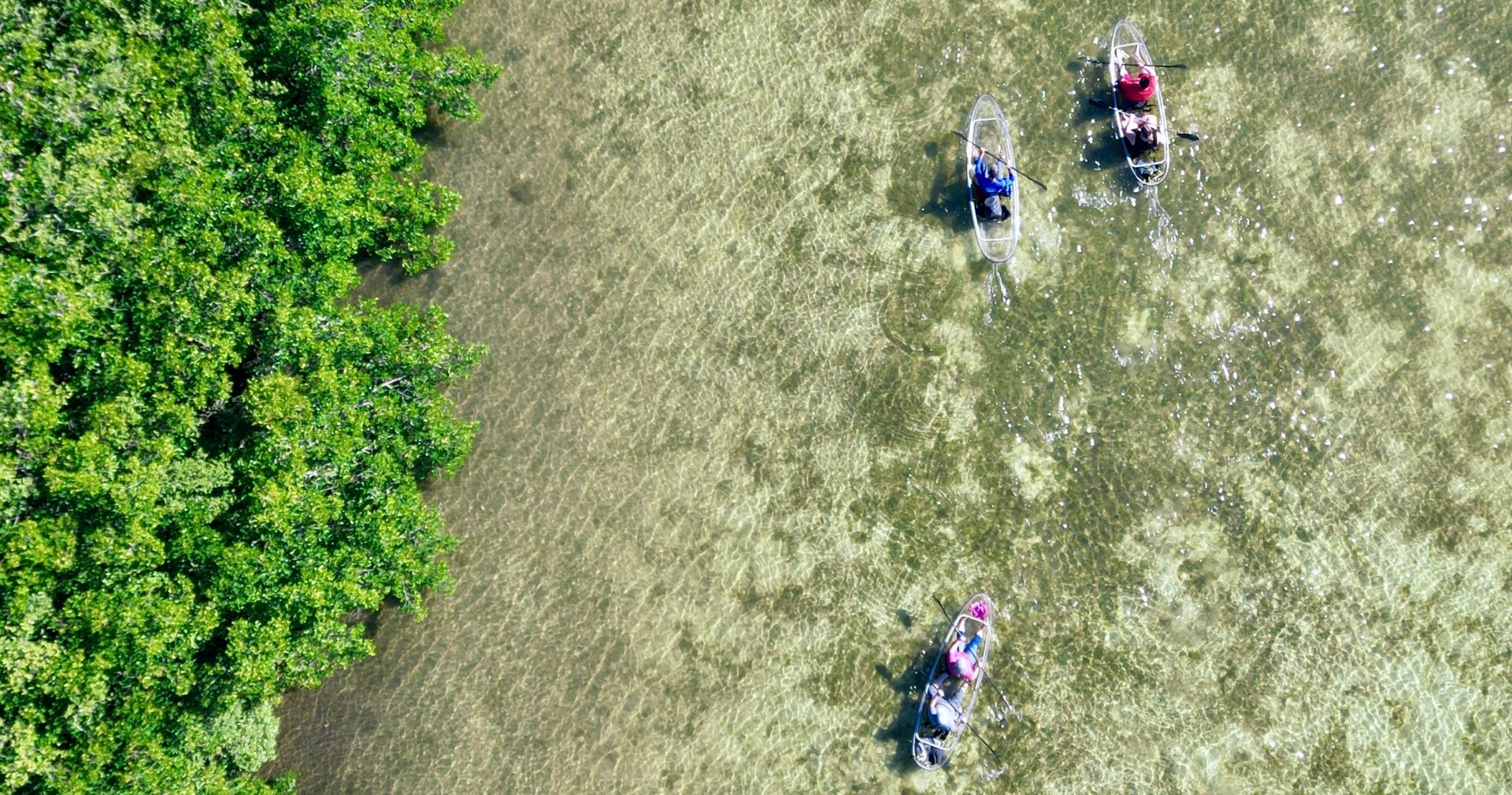
Rotonda West’s geography is what makes it quietly brilliant for kayaking: a patchwork of protected bays, tidal creeks, and mangrove islands that buffer the open Gulf and create miles of calm water to pick apart by paddle. The estuary—part of the larger Charlotte Harbor system—offers a diversity of micro-environments within a short distance. On any given outing you can launch from a neighborhood park, weave through labyrinthine mangrove tunnels, float over seagrass flats that scatter scallop shells like confetti, and then cross into broad bay water with a horizon that reads like the Atlantic in miniature.
The tempo here is reflective rather than adrenaline-driven. Routes favor flatwater and slow-moving currents, which makes Rotonda West excellent for beginners, families, and photographers who want to linger at wildlife hotspots. Dolphins frequently bubble and play near kayak routes; manatees graze the shallows in cooler months; and migratory wading birds use the shallows as a stage in fall and spring. For a paddler who values slow appreciation of a place—listening to gulls and watching the light slide across flats—this coast feels made-to-measure.
Yet within that quiet there’s room for variety. Strong paddlers can stitch longer coastal circuits to Boca Grande or explore the more exposed edges of Pine Island Sound on steady wind days. Kayak anglers will find the area’s backwaters and passes productive for snook, redfish, and trout; combining a fishing rig with a sit-on-top or hybrid kayak turns an ordinary paddle into a full-day pursuit. Sea-kayakists who are comfortable with tides and wind can use Rotonda West as a launching point for multi-bay crossings and island-hopping, especially in the shoulder seasons when winds are lighter and water temperatures are pleasant.
Culturally and ecologically, the place is layered. The Charlotte Harbor estuary is historically home to the Calusa people; later, the region developed a mosaic of fishing villages and niche coastal industries. Today local guides, small outfitters, and community stewardship groups help maintain launch points and promote responsible use—important in an ecosystem sensitive to trampling, prop scars, and water-quality issues like red tide. Practical paddling here always includes an awareness of tides, boat traffic in channels, and seasonal algae events. When those variables are respected, Rotonda West offers an immersive, tactile coastal experience where every bend in a mangrove tunnel and every shell-strewn spit feels like a small discovery.
Protected water: Extensive mangrove estuaries create calm routes perfect for learners and photo-focused paddles.
Wildlife focus: Regular sightings of dolphins, manatees, birds, and rich seagrass beds make every trip an ecological lesson.
The harbor is the gateway, and the Pacific becomes the classroom.
Accessible launch points: Neighborhood parks, public boat ramps, and guided-outfitter shuttles make logistics straightforward.
Versatility: Flatwater family paddles, kayak fishing, longer coastal crossings, and combined SUP trips are all viable.
Conservation-minded: Stewardship groups monitor seagrass and manatee zones—respect marked areas and follow leave-no-trace marine practices.
Choose by purpose
Whale watching, snorkeling, sunset sailing, cultural canoeing, harbor sightseeing, or private chartering.
Start near the city
Waikiki and Honolulu Harbor are primary hubs, with some trips launching near Hanauma Bay.
Confirm the vessel
Gangways, shaded seating, and boarding requirements vary according to vessel size and operator.