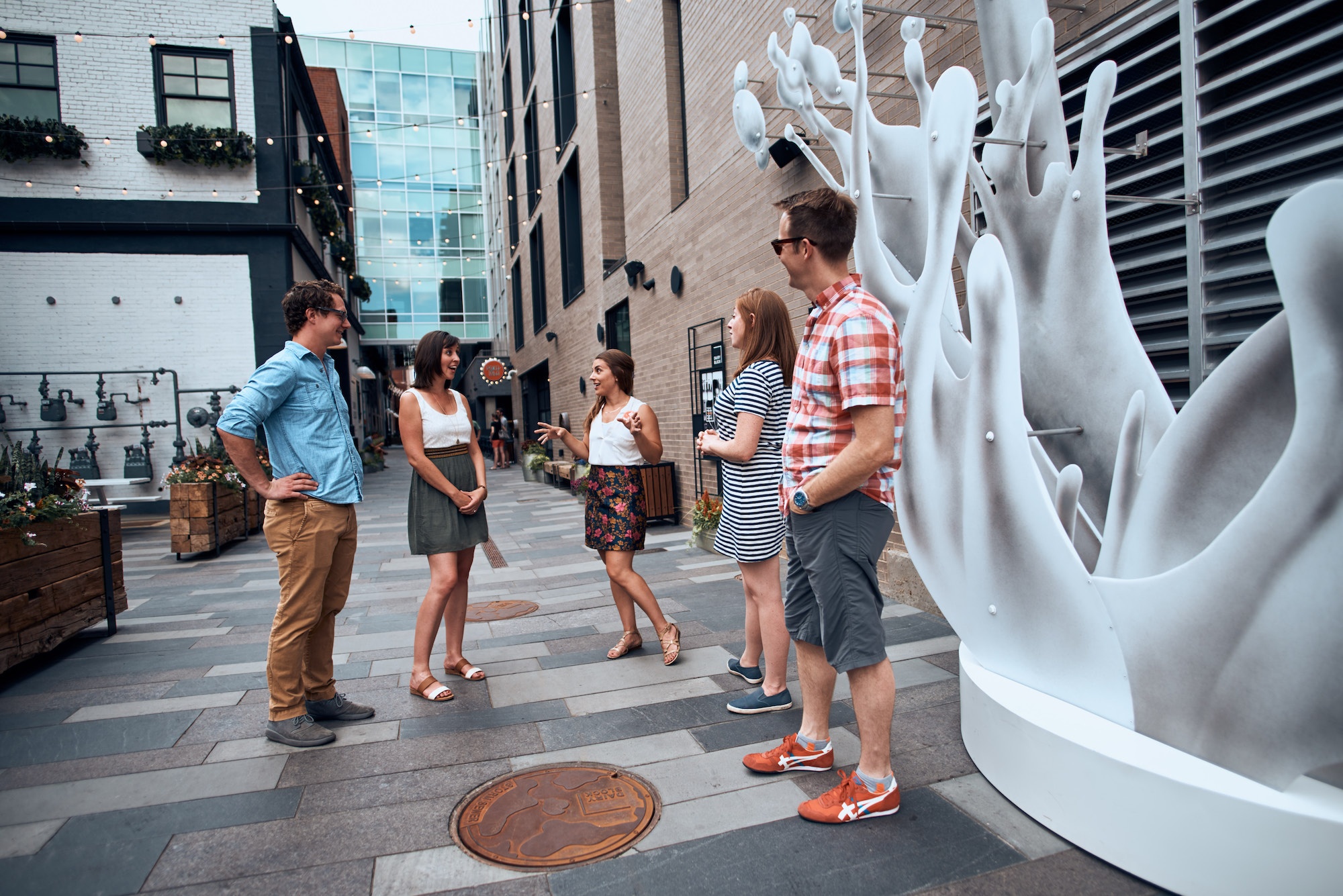
Delgany is the kind of small Colorado town that rewards slow travel. Streets are compact, storefronts cluster along a walkable main corridor, and within a short radius the town opens into grassland ridges and shady riparian corridors—ideal terrain for walking tours that move easily between cultural context and natural scenery. Walking here isn’t only transit from point A to B; it’s an invitation to read a layered landscape. Historic buildings show the imprint of early settlers and regional mining booms; pocket parks harbor native grasses and songbirds; and trailheads spill you into foothill vistas that frame the Rocky Mountain skyline.
A walking tour in Delgany can be as urbane or as wild as you prefer. Guided history walks highlight preserved architecture, old mercantile sites, and the local stories that shaped the town’s identity; food-and-drink strolls stitch together cafés, bakeries, and small tasting rooms; while nature-focused walks follow creek corridors, open-space meadows, and low ridgelines where the understory changes with the seasons. This proximity between town and trail turns half-day walks into full sensory experiences: one moment you’re hearing a barista tamping espresso, the next you’re under cottonwoods listening to creek run-off and the distant air of mountain winds.
Practicality is part of Delgany’s appeal. The town’s modest scale makes self-guided tours easy—download a route, lace up sensible shoes, and you can complete most signature walks in 60–120 minutes. For those who want more context, local outfitters and historical societies run scheduled guided tours that add depth with anecdotes, archival photos, and natural-history insights. The walking-tour scene also pairs naturally with adjacent activities: birdwatching on early-morning strolls, mountain-biking on nearby multi-use routes for a faster tempo, and afternoon drives or trail hikes up into the higher foothills for extended exploration.
Seasonality shapes the character of a Delgany walk. Spring brings migrating songbirds, wildflower edges, and cool mornings that brighten into warm afternoons—ideal conditions for longer loops. Summer afternoons are warm and often punctuated by isolated thunderstorms, so early starts or late-afternoon walks are best. Fall is quietly spectacular: as cottonwoods and riparian shrubs color up, photo-friendly light sets the town and nearby ridges aglow. Winter trims the crowds and can reward sturdy walkers with crisp air and a quiet, frosted aesthetic; some routes may need microspikes on icy days.
Above all, walking in Delgany feels human-scaled and welcoming. Routes are layered with options—short accessible promenades, moderate nature loops with gentle elevation, and longer out-and-back trails for people who want to stretch a half-day into a village-to-foothills adventure. For travelers, that mix means a single trip can satisfy curiosity, appetite, and a craving for open space without complicated planning.
Walks in Delgany are intentionally hybrid: part town tour, part nature stroll. The result is an intimacy with place that larger destinations often dilute.
Local guides emphasize storytelling—historical anecdotes, ecological context, and recommendations for complementary experiences like short hikes, brewery stops, or seasonal events.
The harbor is the gateway, and the Pacific becomes the classroom.
Because Delgany sits near the foothills, many walking routes include short elevation changes; good footwear and awareness of weather patterns make a large difference in comfort.
Choose by purpose
Whale watching, snorkeling, sunset sailing, cultural canoeing, harbor sightseeing, or private chartering.
Start near the city
Waikiki and Honolulu Harbor are primary hubs, with some trips launching near Hanauma Bay.
Confirm the vessel
Gangways, shaded seating, and boarding requirements vary according to vessel size and operator.