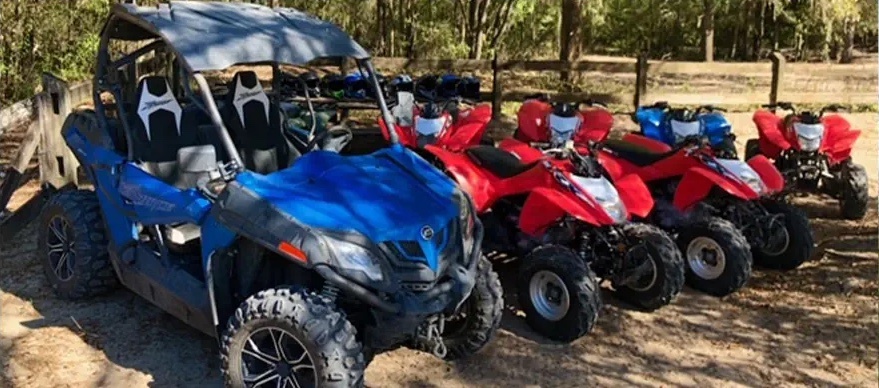
Why Bushnell Is a Standout ATV/UTV Destination
At first glance, Bushnell looks like the kind of small Florida town that exists comfortably outside the tourist churn: a scattering of storefronts, passing trains, cattle pastures, and wide shoulders leading into pinewoods. For riders who have spent time chasing elevation for thrills, that quiet can read as understatement. Spend a day in the seat here and you discover why many consider Bushnell a deceptively good ATV/UTV base. The area’s charm is its variety — short, technical stretches of sandy single-track and two-track, open ranchland where you can open a throttle and feel the wide, flat horizon, and wetland-adjacent trails that shift from firm marl to sticky mud depending on the season. Those transitions make for a riding day that tests handling, navigation, and judgment in small, rewarding doses.
The riding terrain is fundamentally Floridian: pine flatwoods, oak hammocks, scrubby sandhill ridges, and meandering river corridors. Trails carve around wetlands and sinkholes, thread through horse farms, and loop along logging roads and firebreaks. That creates a patchwork ride where you’re just as likely to spot a heron over a blackwater creek as you are to cross paths with local hunters prepping a blind. It’s intimate, and that intimacy matters. Many of Bushnell’s routes are multi-use, shared with horseback riders and hikers, so etiquette and respect for quieter users are part of the local riding culture. The result is a place that rewards curiosity: take a secondary track and you might find a wide sandy field perfect for practicing handling, or a narrow, rooty run that forces you to pick lines and throttle control.
Practical planning is straightforward but essential. The best windows are the dry months — roughly November through April — when trails lock up and sandy sections ride consistently. Summer and the rainy months can turn some low-lying routes into deep mud traps; that’s part of the appeal for mud-lovers, but it also raises the chance of getting stuck and causes more trail damage. Many riders combine an independent day of exploration with local guided trips that offer trailer logistics, route knowledge, and vehicle support; guided outings are especially helpful for first-time regional visitors who aren’t familiar with wetlands, seasonal closures, or private-property boundaries. Responsible riding here means staying on designated trails, packing out what you pack in, and being prepared for limited phone coverage in some stretches. With good preparation, Bushnell delivers a relaxed, varied riding experience — one where the landscape’s quiet extends an invitation to explore at your pace, and where each run can feel like a small discovery.
Bushnell’s terrain mixes sandy tracks, pine-needle flats, and occasional muddy basins — great for skill building without extreme exposure.
Many trails are multi-use; respect for equestrians and hikers is part of local etiquette.
The harbor is the gateway, and the Pacific becomes the classroom.
Dry months provide the most reliable riding; wet-season runs can be technical and slow.
Guided tours and local outfitters ease logistics and point you to the best, legal routes.
Choose by purpose
Whale watching, snorkeling, sunset sailing, cultural canoeing, harbor sightseeing, or private chartering.
Start near the city
Waikiki and Honolulu Harbor are primary hubs, with some trips launching near Hanauma Bay.
Confirm the vessel
Gangways, shaded seating, and boarding requirements vary according to vessel size and operator.