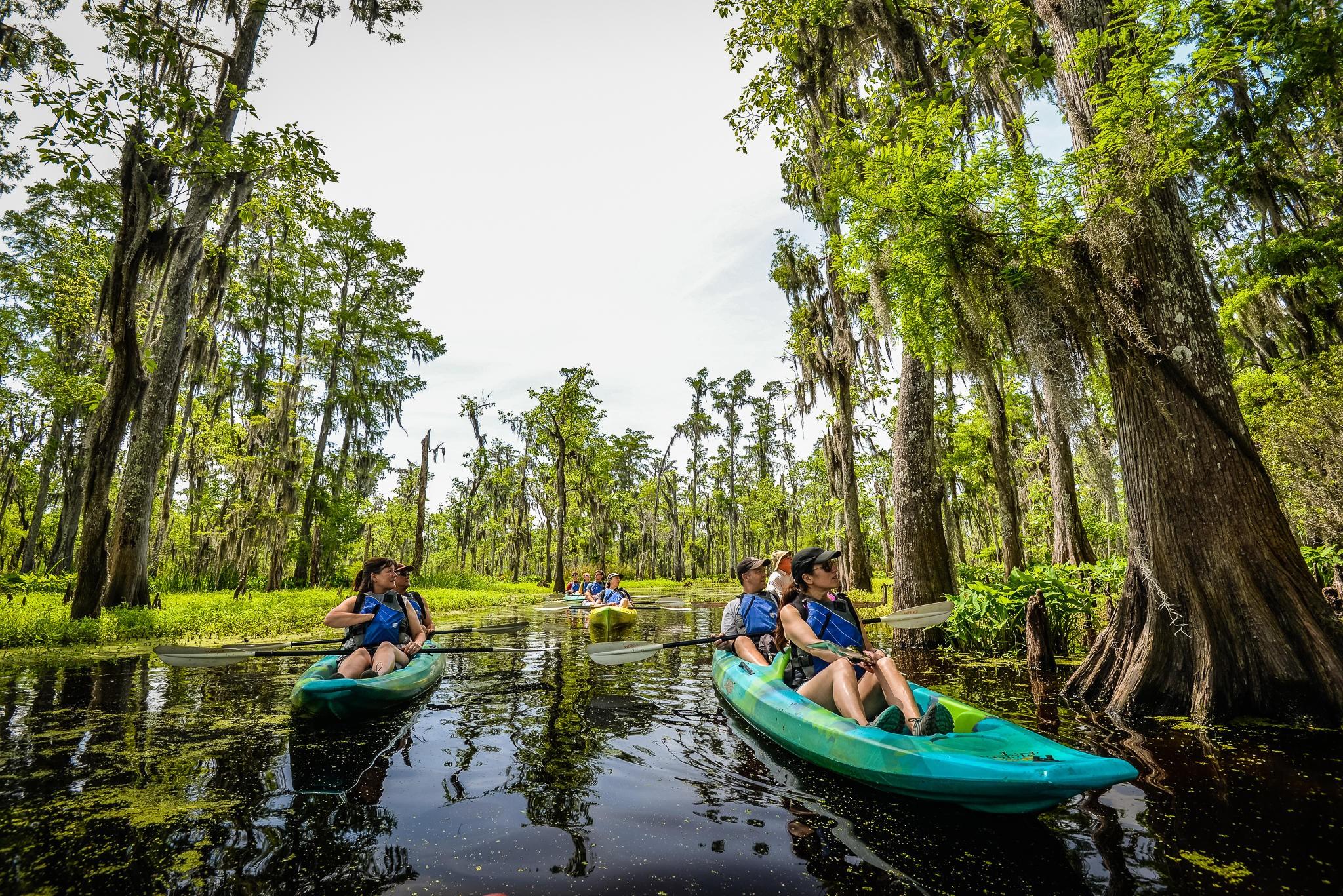
Water is the reason people come here, but the way the water moves—slow, wide, reflective—gives Abita Springs its character. Unlike coastal barrier paddles that bow to wind and tide, the rivers and bayous here are more like long, low corridors of green. The Bogue Falaya threads through bottomland hardwoods and small residential edges; the Tchefuncte opens into broader marsh and estuary terrain nearby. Bayou Lacombe and a constellation of smaller sloughs and oxbows extend the options, providing sheltered, almost private paddles through stands of cypress and tupelo.
What makes Abita special for kayakers is scale and access: launches are often minutes from town, trips can be tailored from 90-minute discovery floats to half-day wildlife rambles, and the water tends to reward slow, attentive paddlers. Herons, kingfishers, otters, and the occasional bald eagle are regular theater. Canoes and stable recreational kayaks excel here; the lack of big waves makes self-rescue less urgent than navigation and attention to changing water levels. There’s also a cultural comfort: a small-town, Southern hospitality that welcomes wet boots and damp paddles. Stop for a soda or a local brew after your paddle—the familiar ritual of drying off and walking into a storefront that remembers its history feels like part of the trip.
From a planning perspective, Abita is forgiving. You don’t need an expedition-level kit or a specialized permit to enjoy many of the paddles described in this guide, but you do need to think about timing, insects, seasonal vegetation, and the fact that some launches are informal. Local outfitters and guided trips add value for birding-focused excursions or for paddles that bridge inland rivers and the wider estuary. If you want to expand the day, pairing a morning paddle on the Bogue Falaya with an afternoon drive to the nearby Honey Island Swamp or a sunset estuary glide on the Tchefuncte will give you variety without long transit. Whether you’re a casual paddler who wants a peaceful morning or an intermediate paddler looking for wildlife photography and longer mileage, Abita’s waterways are approachable and rewarding.
The shallow, slow rivers favor sit-on-top and touring recreational kayaks; narrow creek entrances reward thoughtful route choice rather than brute force.
Seasonal changes—spring high water and summer duckweed growth—alter the experience dramatically. Plan for insects and midday heat in summer; spring and fall are often the most comfortable months for longer outings.
Choose by purpose
Whale watching, snorkeling, sunset sailing, cultural canoeing, harbor sightseeing, or private chartering.
Start near the city
Waikiki and Honolulu Harbor are primary hubs, with some trips launching near Hanauma Bay.
Confirm the vessel
Gangways, shaded seating, and boarding requirements vary according to vessel size and operator.